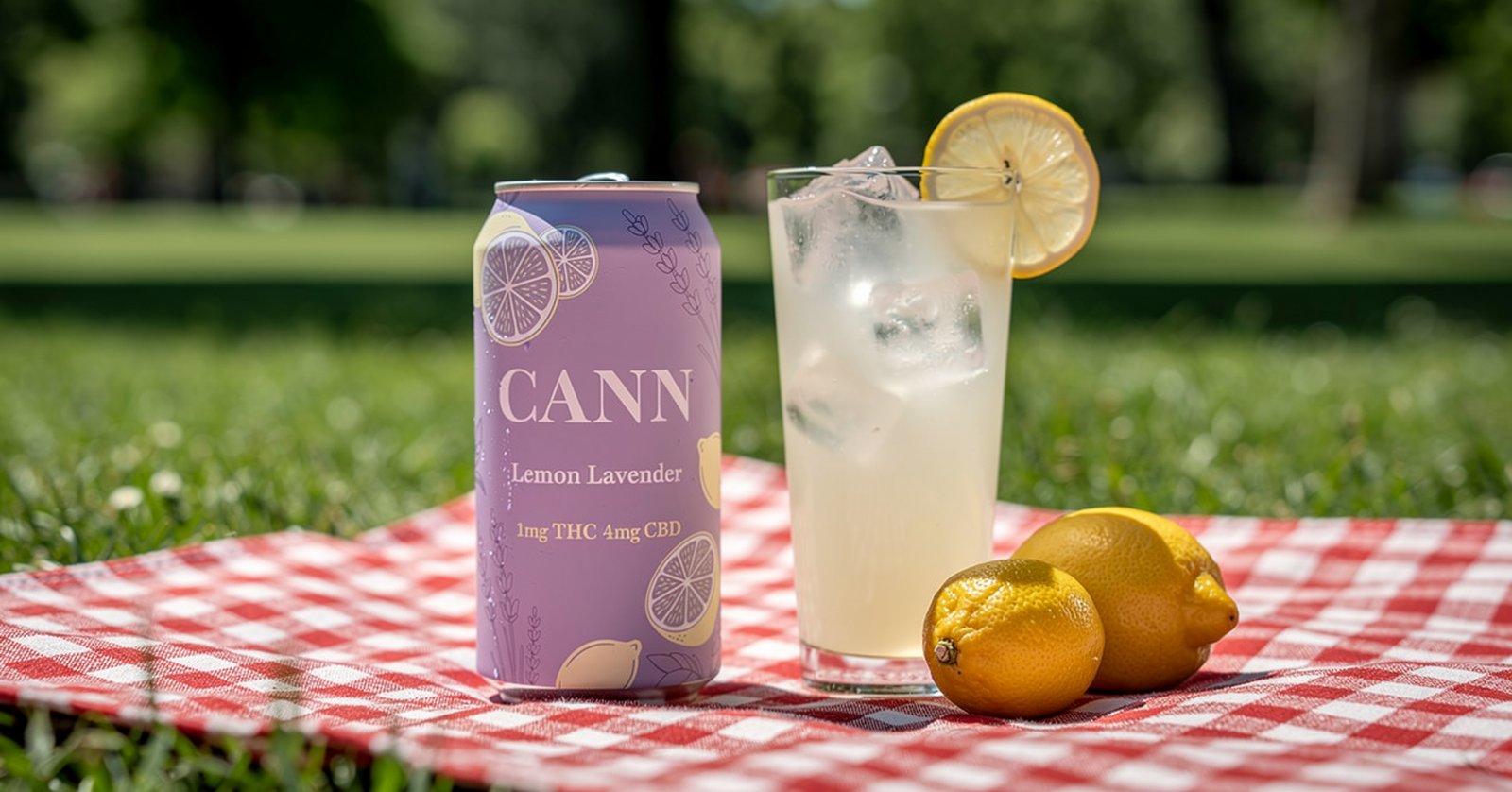
Non-alcoholic THC drinks are cannabis-infused beverages designed to serve the same social function as beer, wine, or cocktails — without the alcohol. They contain THC (the psychoactive compound in cannabis) instead of ethanol, typically in doses of 2–10mg per serving, and are consumed for relaxation, mood elevation, and social enjoyment rather than intoxication in the alcoholic sense.
Why People Are Switching
The 'sober curious' movement — a growing trend of reducing or eliminating alcohol consumption — has created significant demand for beverages that deliver a social buzz without the consequences of alcohol. According to industry data, over 30% of U.S. adults have actively reduced their alcohol intake in recent years. Cannabis beverages occupy a unique space in this movement: they are psychoactive (unlike truly non-alcoholic beverages like sparkling water) but don't produce hangovers, carry lower calorie counts, and produce effects that plateau rather than escalate linearly with consumption.
The question is no longer whether cannabis drinks can replace alcohol. For millions of consumers, they already have — at least for the occasions where the goal is relaxation, not social obligation.
The Green Reviews
Advantages Over Alcohol
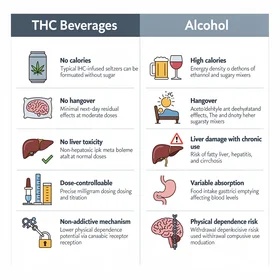
The case for THC beverages as an alcohol alternative rests on pharmacology, not marketing. These are measurable, evidence-based differences:
- No hangovers — THC does not produce the headache, nausea, and dehydration cycle associated with alcohol metabolism. Alcohol's hangover is caused by acetaldehyde (a toxic byproduct of ethanol breakdown), dehydration, and inflammatory immune response. THC does not produce any of these metabolic pathways.
- Lower calories — Most THC seltzers contain 0–30 calories per can, compared to 100–250 for beer and 100–400+ for cocktails. For people tracking calories, this is a significant practical advantage.
- No liver toxicity — At standard consumer doses, THC does not cause the liver damage associated with chronic alcohol use. Alcohol is a direct hepatotoxin; cannabis is not.
- Plateau effect — Cannabis effects plateau after a certain dose rather than continuing to escalate. This makes overconsumption uncomfortable but less dangerous than alcohol poisoning, which can be fatal.
- No physical withdrawal — Cannabis can produce psychological dependence, but it does not cause the dangerous physical withdrawal syndrome associated with alcohol dependence (which can be life-threatening).
THC Drink Alternatives by Occasion
The best THC drink for replacing alcohol depends on the social context. Here is a practical swap guide:
| Instead of... | Try... | Brand Examples |
|---|---|---|
| Beer at a BBQ | Low-dose THC seltzer (2–5mg) | WYNK, Cycling Frog |
| Craft beer or cocktail at home | THC craft tonic with real flavor depth | Just Chill (Rainier Cherry, Lemon Ginger) |
| Wine with dinner | THC sparkling tonic (5–10mg) | Cann (hemp) or a 5–10mg dispensary sparkling tonic in legal states |
| Cocktail at a party | Cocktail-style cannabis drink (5–10mg) | Licensed dispensary cocktail formats in rec states |
| Nightcap | THC + CBN sleep formula | Hemp CBN cans where they ship; higher-dose CBN mostly dispensary |
| Shot after work | THC shot (10mg, fast-acting) | 10mg fast-onset single-serve at a licensed dispensary |
The Sober Curious Spectrum
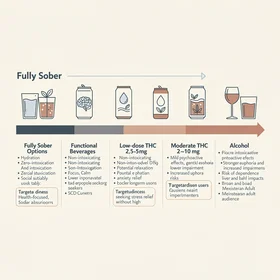
The alcohol alternative market is not binary — it is a spectrum of options with different trade-offs. Understanding where THC drinks sit relative to other alternatives helps you make an informed choice:
| Alternative | Psychoactive? | Social Buzz? | Calories | Drug Test Risk? | Legal Everywhere? |
|---|---|---|---|---|---|
| THC beverages | ✓ | ✓ | 0–30 | ✓ | ✗ |
| NA beer/wine | ✗ | ✗ | 50–100 | ✗ | ✓ |
| Kava drinks | ✓ (mild) | ✓ (mild) | 10–40 | ✗ | ✓ |
| Adaptogen/mushroom drinks | ✗ | ✗ | 0–30 | ✗ | ✓ |
| Sparkling water | ✗ | ✗ | 0 | ✗ | ✓ |
What THC Drinks Cannot Replace
Despite the advantages, THC beverages have significant limitations as alcohol alternatives. Being honest about these limitations is part of responsible coverage:
- Bar and restaurant availability — You cannot order a THC drink at most bars or restaurants. The social infrastructure does not exist yet, and liquor license laws in most states prevent bars from serving cannabis products. This is the single biggest practical barrier.
- Legal portability — You cannot carry cannabis drinks across state lines. Alcohol is universally legal (21+) and portable. Even hemp-derived THC beverages face an uncertain patchwork of state-level regulations.
- Professional social situations — Cannabis still carries stigma in many professional contexts where alcohol is normalized. A beer at a business dinner is unremarkable; a THC tonic would raise eyebrows in most industries.
- Drug testing — THC from any source will show up on standard drug tests. Alcohol does not trigger drug screens (unless tested specifically). This makes THC drinks a non-option for people in safety-sensitive jobs, CDL holders, those on probation, or anyone whose employer tests.
- Research depth — Alcohol's health effects are extensively studied over centuries. Cannabis beverages as a category have less than 10 years of market data. Claims about long-term safety — positive or negative — are premature.
THC drinks are a replacement for some alcohol occasions, not all of them. The strongest use case is personal relaxation and small social gatherings with people who are comfortable with cannabis — not business dinners, public venues, or situations where drug testing is a concern.
The Timeline of Alcohol Alternatives
Cannabis beverages are part of a broader cultural shift in how Americans think about alcohol and social drinking:
Craft NA Beer Emerges
Athletic Brewing and other craft NA beer companies launch, proving that non-alcoholic beer can taste good and sell at premium prices. The stigma around 'not drinking' begins to soften.
Sober Curious Movement
Ruby Warrington's 'Sober Curious' framework goes mainstream. Dry January participation spikes. The cultural permission to question your drinking habits without identifying as an alcoholic becomes widespread.
Cannabis Beverages Enter
The Farm Bill enables hemp-derived THC drinks to ship nationwide. Cann launches as a purpose-built social tonic. Cannabis beverages position themselves not as a drug product but as an alcohol alternative.
Mainstream Adoption
THC seltzers appear in grocery stores. Just Chill, WYNK, and Cycling Frog ship direct to buyers in many states. Cannabis drinks enter the same shelf space as NA beer and wellness drinks. The category is legitimized.
Honest Disclosure
THC beverages are not 'healthier' than alcohol in any clinically proven sense. They carry their own risks: impaired driving, variable individual response, drug test implications, and unknown long-term effects. The absence of hangovers does not mean the absence of consequences. Treat them with the same respect you would any psychoactive substance.
We are also not claiming that everyone should switch from alcohol to cannabis. Alcohol works well for many people. The point is that cannabis beverages are now a legitimate option in the alternative-to-alcohol space — one with real advantages and real limitations — and consumers deserve honest information about both.
For full brand comparisons, see our Cannabis Drinks Reviews. For safety information, see our Safety Guide.
Wondering if these ship to you? See the state-by-state shipping list.
Who these are not for
- You're under 21. Every brand here is 21+.
- You live in a state that blocks them. As of September 2026, hemp THC drinks can't ship to 24 states, and 9 more only allow sellers licensed there. Check your state, then the brand's shipping page.
- You want something stronger and live in a rec state. Dispensary drinks run stronger, but you have to buy them in person at a licensed dispensary.
Who should pick what
| If you are... | Best fit |
|---|---|
| Swapping out a beer at a BBQ | A low-dose seltzer, 2mg to 5mg (WYNK, Cycling Frog) |
| Want a craft drink at home instead of a cocktail or craft beer | Just Chill (Rainier Cherry, Lemon Ginger) |
| Want something to sip with dinner instead of wine | A 5mg to 10mg sparkling tonic; hemp ships, higher-dose options are a dispensary buy in legal states |
| At a party and want a cocktail-style drink | A 5mg to 10mg cocktail-format drink at a licensed dispensary in a rec state |
| Want a nightcap that helps you sleep | A THC plus CBN nightcap formula (hemp CBN cans ship in many states; higher-dose CBN is mostly dispensary) |
| Want a quick 10mg after work | A 10mg fast-onset shot or single-serve at a licensed dispensary |
| Drug tested at work, a CDL holder or on probation | NA beer or wine, since THC shows up on standard tests |
The bottom line
THC drinks can replace alcohol for some occasions, not all. They work best for relaxing at home and small gatherings with people who are fine with cannabis. Match the dose to the drink you're replacing, 2mg to 5mg for a beer and 5mg to 10mg for wine or a cocktail. If you get drug tested, stick with NA beer or wine.